Quê Me Quê Me: Action for democracy in Vietnam & Vietnam Committee on Human Rights
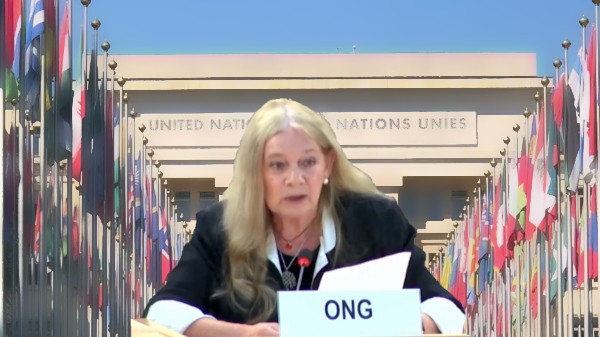
GENEVA, 7 July 2025 (VCHR): As the UN Human Rights Committee meets to examine the fourth periodic report of Vietnam on implementation of the International Covenant on Civil and Political Rights (ICCPR) at its 144th Session in Geneva, the Vietnam Committee on Human Rights (VCHR) and FIDH (International Federation for Human Rights) have presented a joint “Shadow Report” documenting Vietnam’s systematic violations of fundamental freedoms and lack of compliance with its engagements to respect the civil and political liberties defined in the ICCPR.
Vietnam acceded to the ICCPR, one of the UN’s most important human rights instruments, in 1982. State parties have a binding obligation to submit regular reports to the UN Human Rights Committee, yet this is only the fourth time Vietnam has presented a report in 43 years.
Testifying today before the 18-member UN Committee of experts on behalf of the two organisations, VCHR President Penelope Faulkner expressed deep disappointment with the report of Vietnam, presented by Vice-Minister of Justice Nguyễn Thanh Tịnh and a delegation of 24 officials from Vietnam:
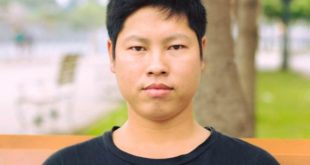
“Vietnam’s report has a distinct air of déjà vu. It contains a list of laws, decrees and regulations adopted since its last report, with little or no information as to their implementation” she said. “It responds with blanket denials to the UN’s concerns on torture, inhumane prison conditions and arbitrary detention and claims that there are ‘no prisoners of conscience in Vietnam’. Worse still, Vietnam provides blatantly false information to the UN Human Rights Committee. Responding to questions on detained environmental rights defenders, Vietnam said they had all been released. This is a lie. Lawyer Đặng Đình Bách is in jail, serving a five-year prison term under extremely harsh conditions in the notorious Prison No. 6 in Nghệ An” Faulkner said.
Despite its obligations to uphold the rights enshrined in the ICCPR, Vietnam continues to repress civil society and adopt restrictive legislation to limit the exercise of civil and political rights. Political repression is “legalised” by broadly-defined “national security” provisions in the Criminal Code, in particular Article 109 on “activities aimed at overthrowing the people’s administration;” Article 117 on “making, storing, disseminating information, document, materials, items against the Socialist Republic of Vietnam;” and Article 331 on “abusing democratic freedoms to infringe upon the interests of the state”.
“These vague, catch-all provisions are in fact a legal veneer to suppress human rights”, Faulkner told the Committee. “They make no distinction between violent acts and the legitimate exercise of the right to freedom of expression, and transform peaceful human rights advocates into criminals”. Virtually all domestic legislation contain clauses restricting human rights on the grounds of “undermining national security” or “threatening the interests of the state,” in gross violation of the ICCPR.
Under this pretext, Vietnam is intensifying arrests of human rights defenders, bloggers, religious followers, civil society activists and government critics. In an unprecedently fierce crack-down on freedom of expression between January 2019 and March 2025, at least 209 persons (including 35 women) were arrested, and at least 177 (including 28 women) were sentenced to prison terms of up to 15 years. Politically motivated charges of “tax evasion” and “disclosing state secrets” have also been used to prosecute climate change leaders and labour rights advocates.
Unfair trials, systematic denial of legal defense, degrading detention conditions and ill-treatment of prisoners are routine in Vietnam, in violation of Article 14 of the ICCPR. The 2015 Criminal Procedures Code permits virtually unlimited pre-trial detention, prolonged incommunicado incarceration and secret trials for suspected “national security” offenders. Prisoners who protest detention conditions are subjected to disciplinary measures including shackling and solitary confinement, and even risk additional prosecution. In May 2025, land-rights activist Trịnh Bá Phương, who is serving a 10 year sentence under Article 177 of the Criminal Code was charged with a second prison term after wardens found a document in his cell in which he wrote “down with Communism.”
Decree 121 on Lawyers, which came into force in June 2025, severely undermines the right to judicial protection by shifting the power to grant, renew and revoke licences to practice law from the Ministry of Justice to Chairpersons of provincial People’s Committees (the local CPV authorities). This exposes lawyers to intimidation by local officials, and limits their ability to defend their clients, especially government critics and human rights defenders.
The use of the death penalty is increasing, despite reductions in the number of capital crimes. Detention conditions on death row are inhumane. Prisoners are detained in shackles, which are removed for only 15 minutes per day. Many prisoners have been awaiting execution for over 15 years because the President is “too busy” to sign the execution orders, without which executions cannot take place.
Alongside physical repression, Vietnam uses the law to restrict human rights and reduce civil society space. The Communist Party’s “Directive 24” identifies the development of civil society and independent trade unions as a key threat. Numerous new regulations have been issued to limit civil society’s access to foreign funding and reduce the scope of their activities. Most disturbing is Decree 126/2024 on Associations, which VCHR and FIDH described as “a grave backslide in the protection of the right to freedom of association in Vietnam”. The Decree grants the authorities broad powers to control, veto and suspend associations, and obliges them to “comply with the Party’s policies” and “propagate and popularise the Party’s guidelines”, in violation of Article 19 of the ICCPR on the right to freedom of association.
Freedom of expression and the press, both online and offline, are gravely restricted. There are no independent media outlets in Vietnam. Even the state-controlled press is subjected to censorship under the government’s “Plan 2025”, which bans the media from “delving into political issues and reporting on negative phenomena”. Journalist who post news deemed to “deny revolutionary achievements” or “offend national heroes” risk fines and imprisonment.
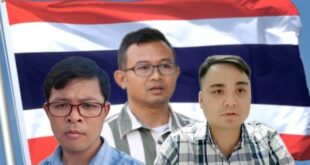
VCHR and FIDH also expressed grave concern on increasing acts of transnational repression against Vietnamese activists and dissidents abroad, including harassments, abduction and forced repatriation. Blogger Dương Văn Thái, abducted in Thailand where he had obtained refugee status, was repatriated and and sentenced to 12 years in prison in Vietnam. Y Quỳnh Bdap, co-founder of Montagnards for Justice, condemned in absentia to 10 years in prison, also risks repatriation from Thailand. Vietnamese police in connivance with Chinese secret agents arrested Buddhist monk Tulku Hungar Dorje after he fled Tibet to escape religious persecution in March 2025. He died in custody in Ho Chi Minh City only a few days after his arrest and his body was secretly cremated.
In April 2025, Vietnamese Buddhist monk Thích Minh Tuệ was intercepted by police in Sri Lanka and banned from continuing a barefoot pilgrimage through the country after the state-sanctioned Vietnam Buddhist Sangha circulated reports that the monk was a “threat to public order”. FIDH and VCHR told the UN Human Rights Committee: “we fear for the safety of Thích Minh Tuệ if he returns to Vietnam”.
“These massive and systematic human rights abuses are particularly disturbing in the light of sweeping government restructuration in Vietnam led by CPV General Secretary Tô Lâm to cement his grip on power and reinforce the Communist Party’s political control.” Faulkner said. “The CPV and the Vietnamese government pay lip service to UN institutions, but 43 years after acceding to the ICCPR, they have clearly no political will to protect the fundamental rights of the people of Vietnam.”
Contact: Penelope Faulkner: + 33 6 11 89 86 81 or Vo Tran Nhat: + 33 6 62 17 42 29
This post is also available in: