Quê Me Quê Me: Action for democracy in Vietnam & Vietnam Committee on Human Rights
Oral Statement by Penelope Faulkner,
President of the Vietnam Committee on Human Rights (VCHR)
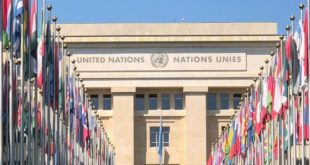
United Nations’ Human Rights Committee
Palais Wilson, Geneva, 7 July 2025
Mr. President, Distinguished Experts,
Thank you for giving me the opportunity to testify today.
The human rights situation in Vietnam is changing rapidly – and for the worse. I would like to raise disturbing issues that happened after we filed our submission to your Committee in May.
A sweeping government reform process led by the Communist Party of Vietnam (CPV) and its General-Secretary Mr. Tô Lâm, has led to a tightening of the Party’s political control, with a total lack of transparency. Crucial aspects of the process, which include amendments to the Constitution and state laws that significantly affect people’s lives, have been classified as “state secrets” by the Politburo’s “Conclusion 155”. Judicial accountability is a serious concern. Under the amended Constitution, only core socio-political organisations in Vietnam Fatherland Front have the right to propose draft laws, instead of multiple stakeholders as before. This amendment process was rushed through the National Assembly and completed in June after a record of only 43 days. The public had barely one month to give its views on these important reforms.
Government Decree 121 on Lawyers, issued in June, seriously impedes access to justice in Vietnam. Whereas the Ministry of Justice was previously charged with granting, renewing or revoking licences to practice law, this is now in the hands of the Chairpersons of provincial People’s Committee’s – the local Communist Party authorities. The Decree not only violates existing law, but may easily be abused by local officials to intimidate lawyers and undermine their ability to defend clients, especially human rights defenders and government critics.
This centralisation of powers is particularly disturbing in the light of upcoming legislative elections to be held in March next year. The CPV controls the whole electoral process, and elections in Vietnam are neither free, fair nor inclusive, in violation of Article 25 of the ICCPR.
Mr President,
We remain deeply concerned that Vietnam has systematically failed to revise “national security” provisions in its Criminal Code, in particular Articles 109, 117 and 331, despite recommendations by your Committee since 2002. These catch-all provisions are in fact a legal veneer to suppress human rights. They make no distinction between violent acts and the legitimate exercise of the right to freedom of expression, and transform peaceful human rights advocates into criminals. We believe there can be no true enjoyment of civil and political rights until Vietnam brings these provisions into line with international human rights law.
Lastly, transnational repression is also a serious concern, with abduction of dissidents and forced returns to Vietnam. In April, police in Sri Lanka intercepted Buddhist monk Thích Minh Tuệ and banned him from continuing a barefoot pilgrimage through the country. They had received a letter from the state-sanctioned Vietnam Buddhist Sangha denouncing the monk as a “threat to public order”. We fear for the safety of Thích Minh Tuệ if he returns to Vietnam.
Thank you for your attention.