Quê Me Quê Me: Action for democracy in Vietnam & Vietnam Committee on Human Rights
The International Federation for Human Rights (FIDH) and the Vietnam Committee on Human Rights (VCHR) welcome the recommendations issued by the United Nations (UN) Human Rights Committee to improve the respect of civil and political rights in Vietnam. The organizations urge the Vietnamese authorities to fully implement the committee’s recommendations without delay, particularly those regarding: the death penalty; transnational repression; torture; detention conditions; the right to liberty; the right to a fair trial; freedom of religion and belief; freedom of expression, peaceful assembly, and association; and participation in public affairs.
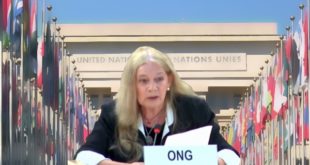
PARIS, 22 July 2025 (VCHR & FIDH) – On 18 July 2025, the UN Human Rights Committee (CCPR) released its findings (known as “Concluding Observations”) on Vietnam following the review of the country’s fourth periodic report on the implementation of the International Covenant on Civil and Political Rights (ICCPR), which took place on 7 and 8 July 2025 in Geneva. The CCPR monitors the implementation of the ICCPR’s provisions by state parties, including Vietnam.
The CCPR’s findings reflected many of the issues raised by FIDH and VCHR in their joint shadow report and in their oral presentations to the CCPR during the review. Below are some of the CCPR’s key concerns and recommendations.
Death penalty
The CCPR expressed concern that capital punishment remained prescribed for 10 crimes, including non-violent offenses, which do not meet the ICCPR’s threshold of the “most serious crimes.” It also regretted the lack of statistical information on death sentences, executions, and the number of prisoners on death row. The CCPR called on the government to adopt a moratorium on executions, consider abolishing the death penalty, and acceding to the Second Optional Protocol to the ICCPR.
Transnational repression
The CCPR noted numerous cases of extraterritorial enforced disappearances and other forms of transnational repression by Vietnamese officials, and the use of politically motivated extradition processes. The UN experts regretted that the government did not provide information on specific cases raised during the review and called on the authorities to investigate all cases of transnational repression and hold those responsible accountable. The CCPR recommended the government also consider acceding to the International Convention for the Protection of All Persons from Enforced Disappearance (ICPPED).
Torture and Ill-treatment
The CCPR expressed concern on the use of torture and ill‑treatment against human rights defenders, journalists, dissidents, and ethnic and religious minorities, including solitary confinement, leg shackling and denial of medical treatment, and by reports of torture used to extract confessions which were used as evidence in court proceedings, including in cases involving the death penalty. They called on Vietnam to prevent and eradicate torture and inhuman or degrading treatment or punishment, ensure that all persons deprived of their liberty have access to medical treatment and to an effective complaint mechanism to report incidents of torture and ill-treatment.
Detention conditions
The UN expertsobserved a deterioration of prison conditions including overcrowding, unsanitary conditions, poor quality food and water, denial of medical care, and exposure to torture and ill-treatment, including prolonged solitary confinement. The CCPR was also concerned by the discriminatory treatment between “regular prisoners” and prisoners of conscience. The CCPR called on the government to ensure that detention conditions comply with relevant international human rights standards and that prisoners of conscience are not subjected to discrimination.
Prolonged pre-trial detention
The CCPR denounced the use of prolonged pre-trial detention, particularly for political dissidents, human rights defenders, journalists, and ethnic and religious minorities. It called for the amendment or repeal of Article 173(5) and Article 74 of the Criminal Procedure Code (CPC), which provide for indefinite detention without trial and deny access to defense counsel for suspects accused of “national security” crimes. The CCPR recommended a significant reduction of the use of pre-trial detention and that all detainees be afforded all legal and procedural safeguards from the outset of their detention, including periodic judicial review.
Independence of the judiciary and the right to a fair trial
The CCPR remained concerned about the Communist Party of Vietnam’s (CPV’s) influence on the judiciary, the lack of judicial accountability and oversight, lack of due process in cases involving human rights defenders, journalists, and ethnic and religious minorities, and the harassment of lawyers defending them. It called on the government to ensure the full independence and impartiality of the judiciary and ensure that all judicial proceedings are conducted in accordance with the fair trial guarantees enshrined in Article 14 of the ICCPR.
Freedom of religion or belief
The CCPR was “deeply concerned” by the increase in discrimination, harassment and intimidation against religious minorities, the undue restrictions on freedom of religion and belief under the Law on Religion and Belief of 2016 and Decree 95/2023, and the use of national security and counter-terrorism laws to target religious minorities. The CCPR called on the government to guarantee the effective exercise of freedom of religion and belief and ensure that domestic legislation and practices fully comply with Article 18 of the ICCPR. It also recommended that national security and counter-terrorism legislation be not arbitrarily applied to arrest, detain, or target religious minorities.
Freedom of expression
The Committee observed “a further decline in freedom of expression” in Vietnam, notably regarding human rights defenders, journalists, political dissidents, and ethnic and religious minorities. It expressed concern about overly broad legal provisions, in particular Articles 109, 116, 117, and 331 of the Criminal Code, which had been used to prosecute human rights defenders, journalists, political dissidents, and ethnic and religious minorities, The CCPR was also concerned by heavy restrictions on media, especially through legislation such as the Press Law, the Access to Information Law, the Cybersecurity Law, and Decrees 147/2024, 53/2022, 15/2020, and 119/2020, and by the removal of all content perceived to be critical of the government from social media platforms. The CCPR called on the authorities to take all the necessary steps to end violations of the right to freedom of expression offline and online, amend or repeal restrictive legislation and enable human rights defenders, journalists, and other civil society actors to carry out their work safely, freely, and independently, without fear of them and their family members’ being subjected to persecution, intimidation, harassment, violence or reprisals. It also called for the release of media workers and human rights defenders detained contrary to the provisions of the ICCPR, and for the adoption of all necessary measures to support a genuinely pluralistic media landscape.
Freedom of peaceful assembly
“Excessive restrictions” on freedom of peaceful assembly and the disproportionate use of force and arbitrary arrests to disperse peaceful assemblies were a serious concern. The CCPR called on the authorities to guarantee and protect the right of peaceful assembly, to investigate all allegations of the excessive use of force or arbitrary arrest in the context of peaceful assemblies, and to release all those arbitrarily detained.
Freedom of association
Recently-adopted legislation, such as Decrees 126/2024 and 114/2021, imposed undue restrictions on the establishment, management, and operation of public associations. The CCPR also noted with concern the “abuse of overbroad tax laws” to penalize human rights defenders and ethnic and religious minorities associations. The CCPR recommended the government take all necessary steps to guarantee the effective exercise of the right to freedom of association, particularly by: amending legislation and practice governing the establishment, management, and operation of associations; remove all undue restrictions and oversight on the ability of civil society organizations to receive international and domestic funding; and refrain from using overbroad tax laws to penalize human rights defenders and ethnic and religious minorities’ associations.
Participation in public affairs
The CCPR remained concerned by the prohibition of political parties other than the CPV, and that independent candidates were required to go through multiple rounds of negotiations with the CPV-led Vietnam Fatherland Front to be listed as candidates. The CCPR recommended the authorities bring electoral regulations and practices into compliance with Article 25 of the ICCPR and ensure transparent, free, and fair elections, promote genuine political pluralism and debate, and ensure the freedom to engage in political activity individually or through political parties and other organizations, including those representing views critical of the government.
In its Concluding Observations, the CCPR requested the Vietnamese government provide, by 18 July 2028, information on the implementation of recommendations concerning: 1) the establishment of an independent national human rights institution; 2) the use of the death penalty; and 3) the right to liberty and security of persons.